
In this video, we take you inside the studio of Maison Douce and into the making of The Cranium Archive — an ongoing series about skulls, memory, inner portraiture, ritual, and the strange tenderness of death. You can see behind-the-scenes footage from our artistic process: studio moments, interview fragments, research material, travel impressions, and the slow transformation of raw material into sculptures, banners, figures, and ritual images.
Can a skull be the most intimate portrait of a person?
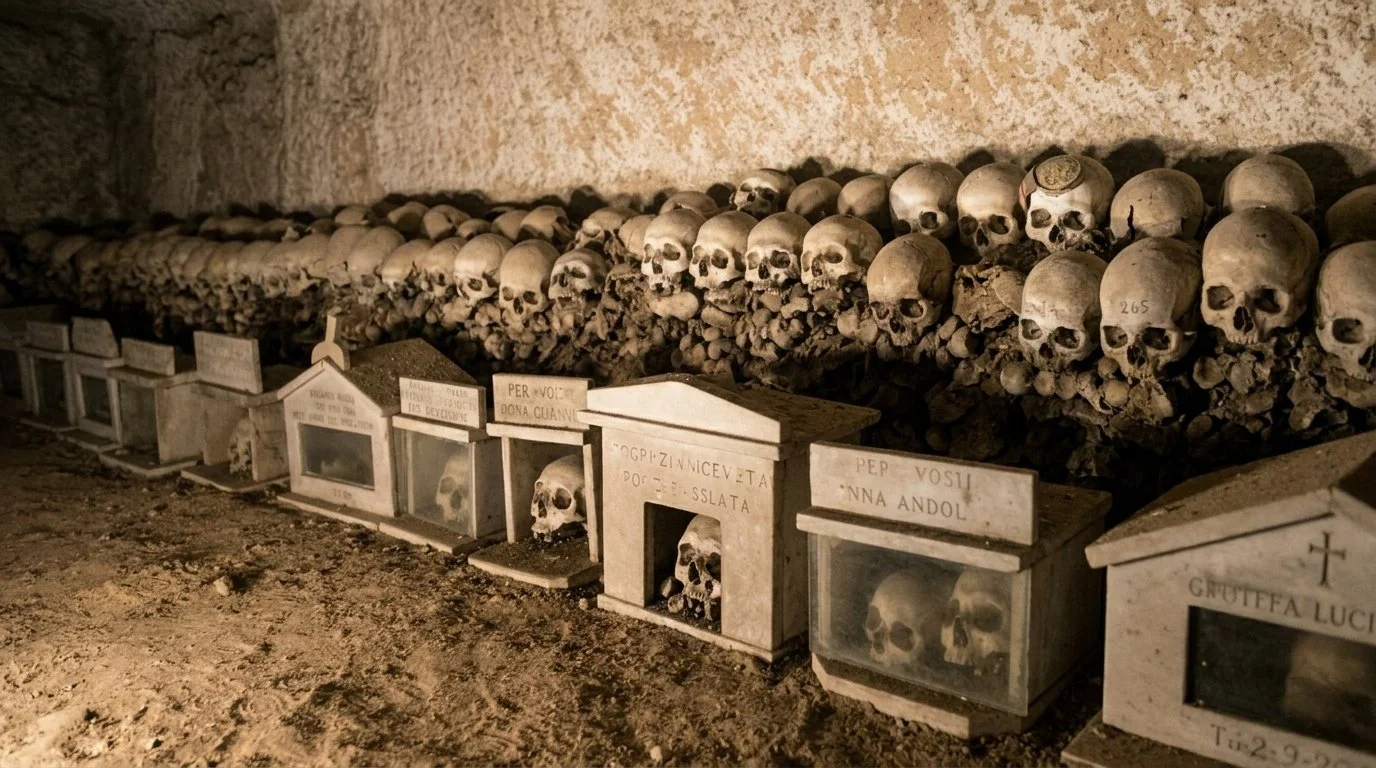
One of the inspirations behind this work is the cult of the anime pezzentelle in Naples, Italy — the “poor souls” of the forgotten dead. In places such as the Fontanelle Cemetery and the church of Santa Maria delle Anime del Purgatorio ad Arco, anonymous skulls were once adopted by the living, often by women. They were cleaned, named, decorated, and prayed for — and, in return, were believed to answer through dreams, protection, or favors. For Maison Douce, this ritual is a powerful image of exchange. The forgotten receive attention, tenderness, names, and care. In return, they may offer meaning, orientation, or unexpected reward. It is a folk practice of memory and intimacy — a negotiation with the invisible.
Our work explores the archaic roots of art and the possibility of reconnecting artistic expression with the sacred. We draw from mythology, Catholic folk devotion, dream imagery, occult traditions, and forgotten histories that still seem to speak beneath the surface of contemporary life.
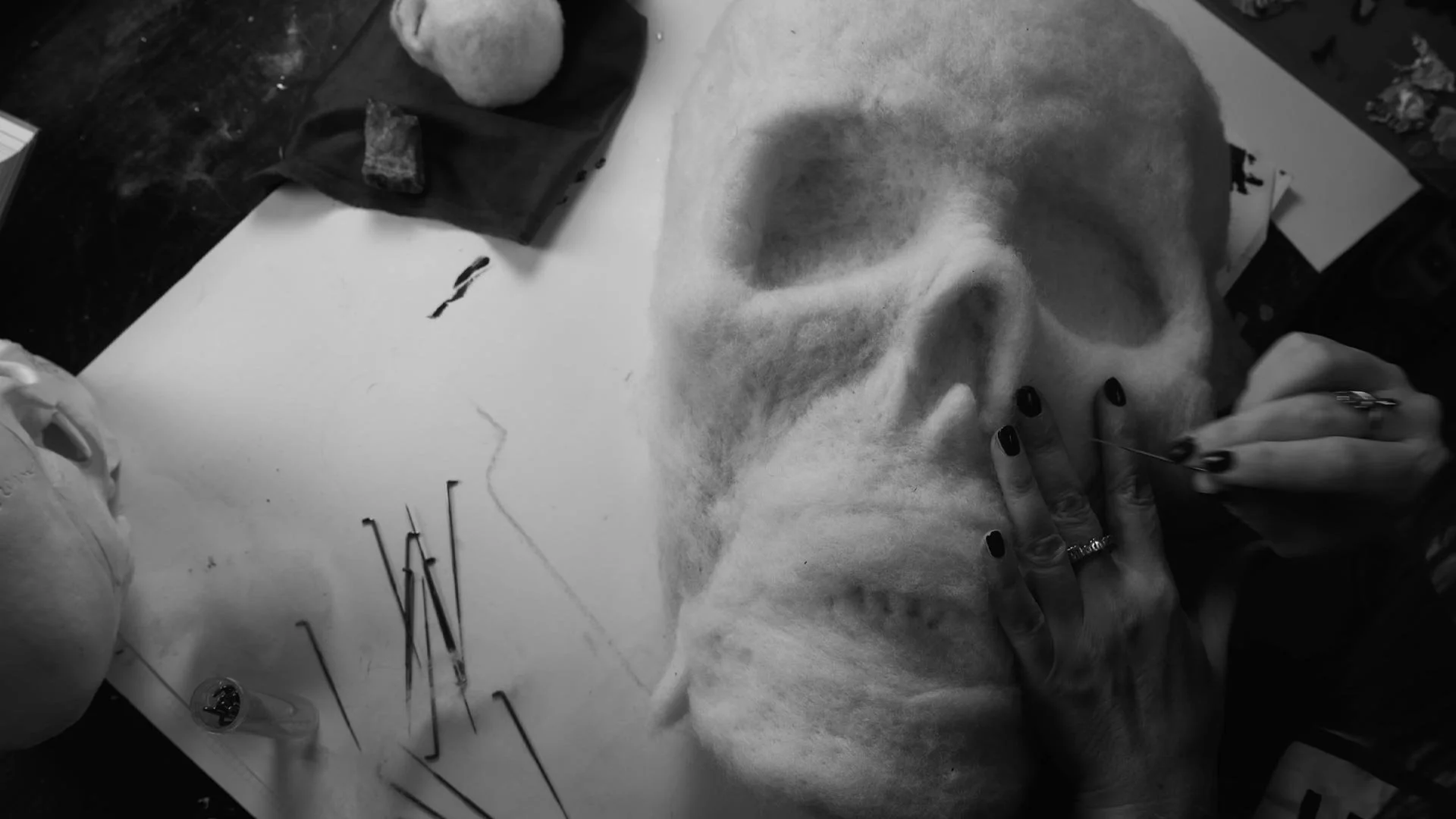
We create needle-felted sculptures by working loose wool fibers with barbed needles until soft matter slowly condenses into form. Skulls, saints, masks, and sculptures emerge from wool. The process is slow, tactile, and almost ritual. There is an uncanny tenderness in the material. Wool can feel innocent, domestic, even childlike — yet here it carries images of death, devotion, transformation, and memory. Through softness, the skull becomes touchable. The symbol becomes intimate.
At the center of the video is The Cranium Archive – an artistic investigation into the skull as the most intimate form of portraiture. A portrait without surface. A catalogue of inner beauty. A system of images in which expression, performance, and social identity are stripped away. What remains is structure: memory, projection, intention, psychic residue.
In religious and mythological traditions, the skull often appears as more than a symbol of mortality. It can become a vessel of consciousness, dream, voice, and presence — a place where something of the self remains after the face has disappeared.
With our Inner Portrait service, Maison Douce creates a portrait of you as a skull: a personal cranium artwork that becomes part of this living archive.
Would you dare to see yourself truly?
